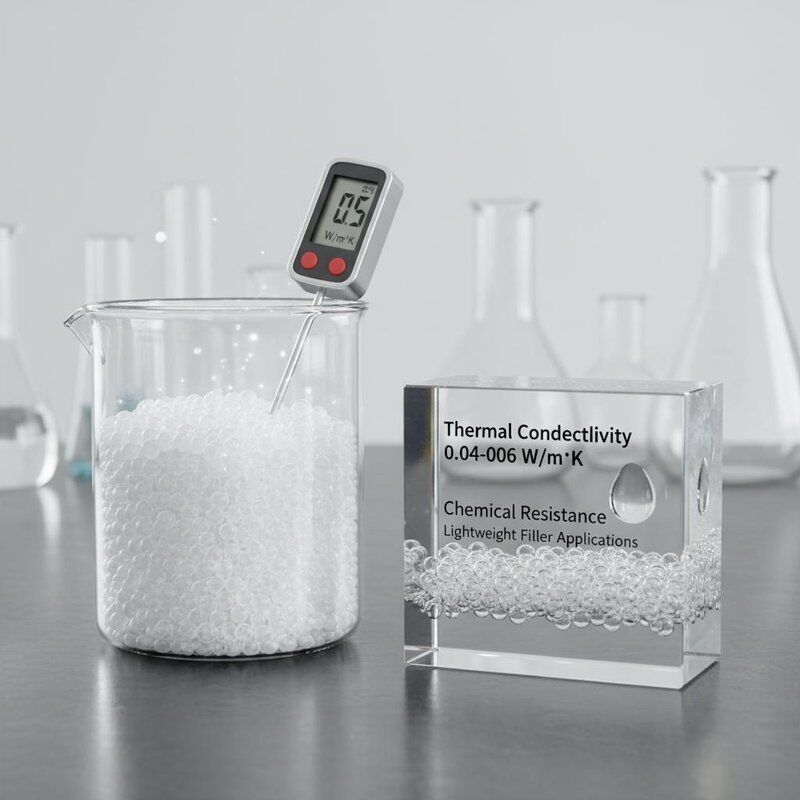
Descrição do Produto:
Microbolhas de Vidro são materiais avançados e leves compostos principalmente de sílica, ar e outros elementos traço. Essas minúsculas esferas ocas exibem características excepcionais que as tornam altamente valiosas em uma ampla gama de aplicações industriais. Um dos principais atributos das Microbolhas de Vidro é sua baixa densidade aparente, que varia dependendo da classe específica do produto. Essa variabilidade permite a personalização para atender a diferentes requisitos, garantindo desempenho ideal em diversos cenários de uso.
A densidade real das Microbolhas de Vidro situa-se na faixa de 0,454 a 0,466 g/cm³, tornando-as notavelmente leves em comparação com muitos outros materiais de enchimento. Essa baixa densidade contribui significativamente para a redução de peso em materiais compósitos, o que é um fator essencial em indústrias como a automotiva, aeroespacial e de engenharia naval. Ao incorporar Microbolhas de Vidro em matrizes compósitas, os fabricantes podem alcançar um equilíbrio entre economia de peso e integridade estrutural.
Uma das características mais notáveis das Microbolhas de Vidro é sua excelente resistência química. Elas demonstram resistência excepcional tanto a ácidos quanto a álcalis, o que garante durabilidade e longevidade mesmo em ambientes químicos agressivos. Essa inércia química as torna ideais para uso em aplicações onde a exposição a substâncias corrosivas é comum, como em revestimentos, adesivos e selantes. A capacidade de manter a estabilidade estrutural e o desempenho sob condições quimicamente agressivas aumenta a confiabilidade dos produtos finais.
A condutividade térmica é outra propriedade crítica das Microbolhas de Vidro. Com uma faixa de condutividade térmica de 0,04 a 0,06 W/m·K, essas microbolhas fornecem isolamento térmico eficaz. Essa característica é particularmente benéfica em aplicações que exigem regulação de temperatura, como painéis de isolamento, materiais resistentes ao fogo e revestimentos de barreira térmica. A baixa condutividade térmica ajuda a minimizar a transferência de calor, melhorando assim a eficiência energética e a segurança.
Em termos de propriedades mecânicas, as Microbolhas de Vidro oferecem uma combinação única de resistência e flexibilidade. Sua estrutura esférica oca contribui para propriedades mecânicas aprimoradas em materiais compósitos, aumentando a resistência ao impacto e reduzindo a fragilidade. Quando usadas como cargas, elas ajudam a melhorar o desempenho mecânico de polímeros, adesivos e outros materiais de matriz sem aumentar significativamente o peso. Isso torna as Microbolhas de Vidro uma escolha popular para reforçar materiais adesivos, onde manter uma ligação forte enquanto reduz o peso é crucial.
A incorporação de Microbolhas de Vidro em materiais adesivos não apenas melhora as propriedades mecânicas, mas também aumenta a facilidade de aplicação. Sua forma esférica permite uma dispersão suave dentro dos adesivos, levando a uma consistência uniforme e melhores características de fluxo. Isso resulta em ligações adesivas mais fortes e confiáveis que se desempenham bem sob estresse mecânico e exposição ambiental. Além disso, a resistência química das Microbolhas de Vidro garante que os adesivos retenham sua força de ligação mesmo quando expostos a produtos químicos agressivos ou condições extremas.
Além disso, a versatilidade das Microbolhas de Vidro se estende a várias indústrias, incluindo os setores automotivo, de construção, eletrônico e naval. Na fabricação automotiva, elas contribuem para componentes leves que melhoram a eficiência de combustível sem comprometer a segurança. Na construção, são usadas para produzir concreto e gesso leves, o que reduz a carga estrutural geral. Na eletrônica, suas propriedades isolantes ajudam a proteger componentes sensíveis do calor e da interferência elétrica. A indústria naval se beneficia de sua resistência à corrosão e flutuabilidade, tornando-as ideais para dispositivos de flutuação e revestimentos leves.
No geral, as Microbolhas de Vidro representam uma solução inovadora para aprimorar o desempenho de materiais através de suas propriedades mecânicas excepcionais, resistência química, isolamento térmico e natureza leve. Sua capacidade de melhorar materiais adesivos e formulações compósitas as torna indispensáveis na fabricação e engenharia modernas. Seja o objetivo reduzir o peso, melhorar a durabilidade ou aprimorar o desempenho térmico, as Microbolhas de Vidro oferecem uma maneira confiável e eficiente de enfrentar esses desafios, impulsionando avanços em múltiplos campos e aplicações.
Recursos:
-
Nome do Produto: Microbolhas de Vidro
-
Diâmetro: 10-55 µm
-
Propriedades ópticas altamente reflexivas
-
Resistência à compressão de 16000 Psi, indicando excelentes propriedades mecânicas
-
Baixa condutividade térmica de 0,153, aprimorando o desempenho de isolamento
-
Aplicações incluem borracha, equipamentos oceânicos e veículos automotivos
Parâmetros Técnicos:
|
Nome do Produto
|
Microbolhas de Vidro
|
|
Área de Superfície
|
Alta
|
|
Resistência Química
|
Excelente Resistência a Ácidos e Álcalis
|
|
Densidade Real
|
0,454-0,466
|
|
Resistência à Compressão
|
16000 Psi
|
|
Diâmetro
|
10-55 µm
|
|
Condutividade Térmica
|
0,04 - 0,06 W/m·K
|
|
Resistência à Temperatura
|
Até 600°C
|
|
Densidade Aparente
|
Varia Dependendo da Classe
|
|
Teor de Umidade
|
<0,5%
|
Aplicações:
As Microbolhas de Vidro HAINUO, modelo HN46HS, são cargas especializadas e leves, conhecidas por sua excepcional resistência química a ácidos e álcalis. Com uma faixa de diâmetro de 10-55 µm e uma densidade real entre 0,454-0,466 g/cm³, essas microbolhas oferecem propriedades únicas que as tornam altamente adequadas para diversas aplicações industriais. Sua notável estabilidade química garante durabilidade e longevidade, mesmo em ambientes agressivos, tornando-as uma escolha ideal para produtos que exigem resistência a substâncias corrosivas.
Na indústria da borracha, as Microbolhas de Vidro HAINUO são amplamente utilizadas para aprimorar as propriedades do material, reduzindo o peso sem comprometer a resistência. Sua incorporação em compostos de borracha resulta em melhor isolamento e flexibilidade, mantendo excelente resistência química. Isso as torna especialmente valiosas em aplicações onde a borracha é exposta a condições ácidas ou alcalinas, garantindo a confiabilidade do produto e uma vida útil estendida.
A indústria oceânica se beneficia significativamente do uso das Microbolhas de Vidro HAINUO devido à sua flutuabilidade e resistência a ambientes marinhos agressivos. Elas são comumente usadas em revestimentos e compósitos que exigem materiais leves e duráveis capazes de suportar a corrosão da água salgada. As microbolhas contribuem para um acabamento superficial mais liso, o que é crucial para reduzir o arrasto e melhorar o desempenho de embarcações e equipamentos marítimos.
No setor automotivo, essas microbolhas são extensivamente aplicadas em formulações de cola para pacotes de baterias. A adição de Microbolhas de Vidro HAINUO à cola de pacotes de baterias não apenas reduz o peso geral do adesivo, mas também melhora o isolamento térmico e as propriedades mecânicas. Isso leva a pacotes de baterias mais seguros e eficientes com durabilidade aprimorada. Além disso, as microbolhas ajudam a obter um acabamento superficial mais liso em aplicações adesivas, o que é essencial para manter padrões de alta qualidade e garantir a adesão adequada em montagens automotivas.
No geral, as Microbolhas de Vidro HAINUO HN46HS servem como um aditivo versátil em várias indústrias, incluindo fabricação de borracha, produção de equipamentos oceânicos e montagem de veículos automotivos. Sua excelente resistência química, natureza leve e efeitos benéficos no acabamento superficial e nas propriedades do material as tornam uma escolha preferencial para aprimorar o desempenho e a longevidade do produto.
Personalização:
A HAINUO oferece Microbolhas de Vidro personalizadas, modelo HN46HS, projetadas para atender às suas necessidades específicas. Com uma densidade real de 0,454-0,466 e alta área de superfície, essas partículas esféricas brancas a off-white proporcionam excelente desempenho em várias aplicações. Nossas Microbolhas de Vidro podem suportar resistência à temperatura de até 600°C, tornando-as ideais para aprimorar o gerenciamento térmico em formulações de cola para pacotes de baterias. Ao integrar as Microbolhas de Vidro da HAINUO em sua cola de pacotes de baterias, você pode melhorar significativamente o isolamento e reduzir o peso, garantindo eficiência e durabilidade superiores.
Suporte e Serviços:
Nosso produto de Microbolhas de Vidro é apoiado por uma equipe técnica dedicada, comprometida em garantir o desempenho ideal e a satisfação do cliente. Fornecemos suporte técnico abrangente, incluindo orientação sobre seleção de produtos, conselhos de aplicação e assistência para solução de problemas. Nossos especialistas estão disponíveis para ajudá-lo a entender as propriedades e os melhores usos das microbolhas de vidro para aprimorar suas formulações e processos.
Oferecemos fichas técnicas detalhadas do produto, informações de segurança e instruções de manuseio para garantir o uso seguro e eficaz de nossas microbolhas de vidro. Além disso, testes personalizados e fornecimento de amostras estão disponíveis para atender aos requisitos específicos do seu projeto.
Nossos serviços técnicos incluem suporte à formulação, testes de compatibilidade e otimização de desempenho para ajudá-lo a alcançar os resultados desejados em suas aplicações, como compósitos leves, materiais de isolamento, revestimentos e muito mais. Trabalhamos em estreita colaboração com sua equipe para fornecer soluções personalizadas que abordem seus desafios únicos.
Para suporte contínuo ao produto, mantemos uma base de conhecimento robusta e recursos técnicos para mantê-lo informado sobre os últimos desenvolvimentos e melhores práticas relacionadas às microbolhas de vidro. Nosso compromisso é entregar produtos de alta qualidade com o respaldo de um serviço especializado para apoiar sua inovação e sucesso.
FAQ:
Q1: Para que são usadas as Microbolhas de Vidro HAINUO Modelo HN46HS?
R1: As Microbolhas de Vidro HAINUO Modelo HN46HS são usadas principalmente como cargas leves em compósitos, revestimentos e adesivos para reduzir a densidade e melhorar as propriedades de isolamento.
Q2: Qual é a faixa de tamanho das Microbolhas de Vidro HAINUO HN46HS?
R2: As Microbolhas de Vidro HAINUO HN46HS geralmente têm um diâmetro variando de 15 a 60 mícrons, oferecendo distribuição uniforme do tamanho das partículas para um desempenho consistente.
Q3: As Microbolhas de Vidro HAINUO HN46HS são quimicamente estáveis?
R3: Sim, as Microbolhas de Vidro HAINUO HN46HS são quimicamente inertes e estáveis, tornando-as adequadas para uso em vários ambientes químicos sem degradação.
Q4: Como as Microbolhas de Vidro HAINUO HN46HS afetam as propriedades mecânicas dos compósitos?
R4: A incorporação de Microbolhas de Vidro HAINUO HN46HS pode melhorar a relação resistência-peso dos compósitos e reduzir o encolhimento, mantendo a resistência mecânica adequada.
Q5: Qual é a densidade aparente das Microbolhas de Vidro HAINUO HN46HS?
R5: A densidade aparente das Microbolhas de Vidro HAINUO HN46HS é de aproximadamente 0,15 g/cm³, tornando-as altamente eficazes para aplicações leves.


 Por favor verifique seu email!