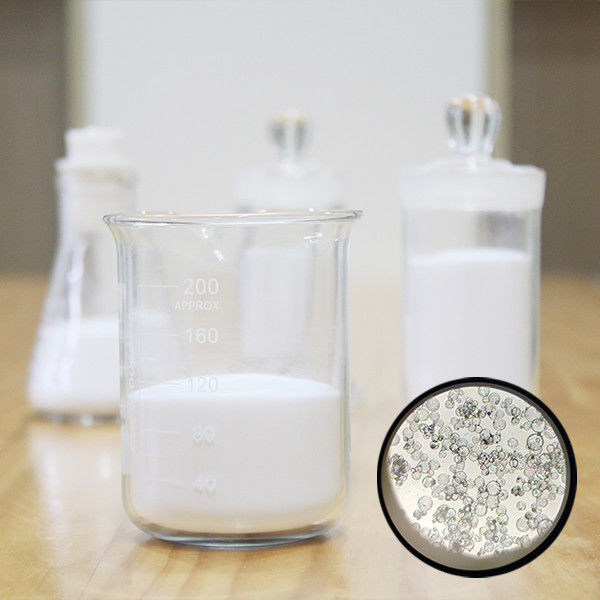
Descrição do Produto:
Microesferas de Vidro são materiais avançados e leves amplamente utilizados em diversas indústrias devido às suas propriedades excepcionais e versatilidade. Essas esferas ocas microscópicas são compostas principalmente por uma composição química única que inclui SiO2 (dióxido de silício), Na2O (óxido de sódio), CaO (óxido de cálcio), MgO (óxido de magnésio) e Al2O3 (óxido de alumínio). Essa mistura precisa de materiais confere às microesferas durabilidade notável, resistência térmica e resistência mecânica, tornando-as uma escolha ideal para aprimorar o desempenho do produto em muitas aplicações.
Uma das características de destaque das Microesferas de Vidro é sua condutividade térmica, que varia de um impressionante baixo de 0,05 W/m·K a 0,2 W/m·K. Essa faixa indica excelentes capacidades de isolamento, ajudando a reduzir a transferência de calor de forma eficiente. Essa característica é particularmente benéfica em indústrias que exigem materiais capazes de manter a estabilidade da temperatura, como aeroespacial, automotiva e construção. A baixa condutividade térmica garante que os componentes que incorporam essas microesferas possam suportar ambientes térmicos agressivos sem comprometer a integridade estrutural ou o desempenho.
O tamanho dessas microesferas geralmente varia entre 20 a 75 micrômetros de diâmetro, oferecendo um bom equilíbrio entre área de superfície e volume. Essa faixa de tamanho permite fácil integração em compósitos, revestimentos e vários sistemas de resina sem aumentar significativamente o peso. O pequeno diâmetro também ajuda a melhorar as propriedades reológicas dos materiais, aprimorando o fluxo e as características de aplicação. Devido à sua forma esférica e distribuição uniforme de tamanho, elas contribuem para um comportamento mais consistente e previsível em materiais compósitos.
Em termos de propriedades mecânicas, as Microesferas de Vidro demonstram uma resistência à compressão de até 100 MPa. Essa excepcional relação resistência-peso as torna um excelente agente de reforço em compósitos leves, proporcionando maior capacidade de carga sem adicionar massa significativa. A alta resistência à compressão também permite que essas microesferas suportem tensões mecânicas consideráveis, tornando-as adequadas para uso em ambientes exigentes, como aplicações marítimas, aeroespaciais e industriais.
A composição química das Microesferas de Vidro — compreendendo SiO2, Na2O, CaO, MgO e Al2O3 — garante estabilidade química e resistência à corrosão e degradação. Esses componentes contribuem coletivamente para a resiliência das microesferas contra ataques químicos e desgaste ambiental, prolongando a vida útil dos produtos em que são incorporados. Essa robustez é crucial para aplicações onde a exposição a produtos químicos agressivos ou condições climáticas extremas é comum.
As Microesferas de Vidro são usadas extensivamente em materiais compósitos para reduzir o peso, mantendo a resistência e a durabilidade. Sua estrutura oca as torna ideais para a criação de painéis leves, adesivos, selantes e revestimentos. Nos setores automotivo e aeroespacial, a incorporação dessas microesferas ajuda os fabricantes a alcançar eficiência de combustível através da redução de peso sem comprometer a segurança ou o desempenho. Além disso, na indústria da construção, elas melhoram as propriedades de isolamento e reduzem a ponte térmica em materiais de construção.
Outra vantagem significativa das Microesferas de Vidro é sua capacidade de melhorar as características de processamento dos materiais. Quando adicionadas a resinas ou polímeros, elas podem reduzir a viscosidade e melhorar o fluxo, o que facilita o manuseio e a aplicação. Essa propriedade é particularmente valiosa em processos de fabricação que exigem precisão e consistência, como moldagem ou fundição. Além disso, a uniformidade e a inércia química das microesferas garantem que elas não reajam adversamente com outros componentes do material, preservando a integridade do compósito.
Em resumo, as Microesferas de Vidro são uma solução de material de ponta caracterizada por uma faixa de condutividade térmica de 0,05 a 0,2 W/m·K, diâmetros entre 20 e 75 micrômetros e resistências à compressão de até 100 MPa. Sua composição química de SiO2, Na2O, CaO, MgO e Al2O3 fornece estabilidade e resistência excepcionais a fatores ambientais. Esses atributos tornam as Microesferas de Vidro um aditivo indispensável em vários setores, oferecendo isolamento térmico aprimorado, resistência mecânica e redução de peso. Seja em aplicações aeroespaciais, automotivas, marítimas ou de construção, as Microesferas de Vidro oferecem desempenho confiável e propriedades de material aprimoradas, tornando-as uma escolha de ponta para engenheiros e designers que buscam soluções inovadoras.
Recursos:
-
Nome do Produto: Microesferas de Vidro
-
Diâmetro Médio: 10-100 Mícron
-
Faixa de Diâmetro: 20-75 µm
-
Resistência à Compressão: Até 100 MPa
-
Composição Química: SiO2, Na2O, CaO, MgO, Al2O3
-
Resistência Química: Boa Resistência à Maioria dos Produtos Químicos
Parâmetros Técnicos:
|
Aplicações
|
Cargas Leves, Isolamento, Compósitos, Espumas Sintáticas
|
|
Resistência Química
|
Boa Resistência à Maioria dos Produtos Químicos
|
|
Material
|
Vidro
|
|
Diâmetro Médio
|
10-100 Mícron
|
|
Diâmetro
|
20-75 µm
|
|
Espessura da Parede
|
1-2 Mícron
|
|
Resistência à Compressão
|
Até 100 MPa
|
|
Condutividade Térmica
|
0,05 W/m·K
|
|
Cor
|
Branco ou Off-white
|
|
Composição Química
|
SiO2, Na2O, CaO, MgO, Al2O3
|
Aplicações:
Microesferas de vidro são materiais versáteis amplamente utilizados em diversas indústrias devido às suas propriedades excepcionais. Com uma densidade real variando de 0,58 a 0,62 g/cm³ e uma baixa densidade aparente entre 0,15 e 0,3 g/cm³, essas microesferas leves proporcionam excelente redução de peso sem comprometer a integridade estrutural. Sua cor branca ou off-white as torna ideais para aplicações onde a estética é importante, bem como em cenários que exigem fácil detecção e controle de qualidade.
Uma das principais ocasiões de aplicação para microesferas de vidro é na fabricação de materiais compósitos. Elas são comumente incorporadas em polímeros, resinas e revestimentos para melhorar a resistência, reduzir o peso e aprimorar o isolamento térmico. Graças à sua boa resistência à maioria dos produtos químicos, as microesferas de vidro podem ser usadas em ambientes químicos agressivos, tornando-as adequadas para plantas de processamento químico, revestimentos marítimos e camadas protetoras que devem resistir a substâncias corrosivas.
Sua impressionante resistência à temperatura, de até 600°C, torna as microesferas de vidro uma excelente escolha para aplicações de alta temperatura. Isso inclui uso nas indústrias automotiva e aeroespacial, onde os componentes são expostos a temperaturas elevadas, mas ainda exigem materiais leves e duráveis. Por exemplo, são usadas em peças de motor, escudos térmicos e painéis de isolamento, garantindo estabilidade de desempenho e longevidade sob estresse térmico.
Além dos usos industriais, as microesferas de vidro encontram aplicação no setor da construção. Elas são adicionadas a misturas de concreto leve e gesso para melhorar o isolamento térmico e reduzir o peso geral do material, facilitando o manuseio e a instalação. Isso é particularmente benéfico em situações onde a redução da carga estrutural é crítica, como em edifícios altos e projetos de renovação.
Outro cenário importante para microesferas de vidro é no campo da eletrônica e isolamento elétrico. Sua baixa densidade e resistência química ajudam na produção de materiais isolantes que mantêm a estabilidade dimensional e resistem à degradação ambiental. Além disso, sua cor branca ou off-white auxilia em processos de inspeção visual, garantindo o controle de qualidade durante a fabricação.
No geral, a capacidade das microesferas de vidro de combinar baixa densidade real, excelente resistência química e tolerância a altas temperaturas as torna indispensáveis em uma variedade de ocasiões e cenários de aplicação. Seja para compósitos leves, revestimentos resistentes a produtos químicos, isolamento térmico ou isolamento elétrico, as microesferas de vidro fornecem uma solução confiável e eficiente que atende aos requisitos exigentes das indústrias modernas.
FAQ:
Q1: O que são Microesferas de Vidro?
R1: Microesferas de Vidro são partículas esféricas minúsculas e ocas feitas de vidro. Elas são usadas para reduzir o peso de materiais compósitos, melhorar o isolamento e aumentar a resistência e durabilidade.
Q2: Para quais aplicações as Microesferas de Vidro são comumente usadas?
R2: Microesferas de Vidro são amplamente utilizadas nas indústrias aeroespacial, automotiva, marítima e de construção. Elas são ideais para cargas leves em compósitos, adesivos, selantes e revestimentos.
Q3: Qual é a faixa de tamanho típica das Microesferas de Vidro?
R3: O tamanho das Microesferas de Vidro geralmente varia de 10 a 100 mícrons de diâmetro, dependendo do grau específico do produto e dos requisitos de aplicação.
Q4: Como as Microesferas de Vidro afetam as propriedades de um material compósito?
R4: A incorporação de Microesferas de Vidro em compósitos reduz a densidade, melhora o isolamento térmico e pode aumentar a resistência ao impacto sem comprometer significativamente a resistência.
Q5: As Microesferas de Vidro são compatíveis com vários sistemas de resina?
R5: Sim, as Microesferas de Vidro são compatíveis com muitos sistemas de resina, incluindo epóxi, poliéster, vinil éster e poliuretano, tornando-as versáteis para diferentes formulações de compósitos.


 Por favor verifique seu email!